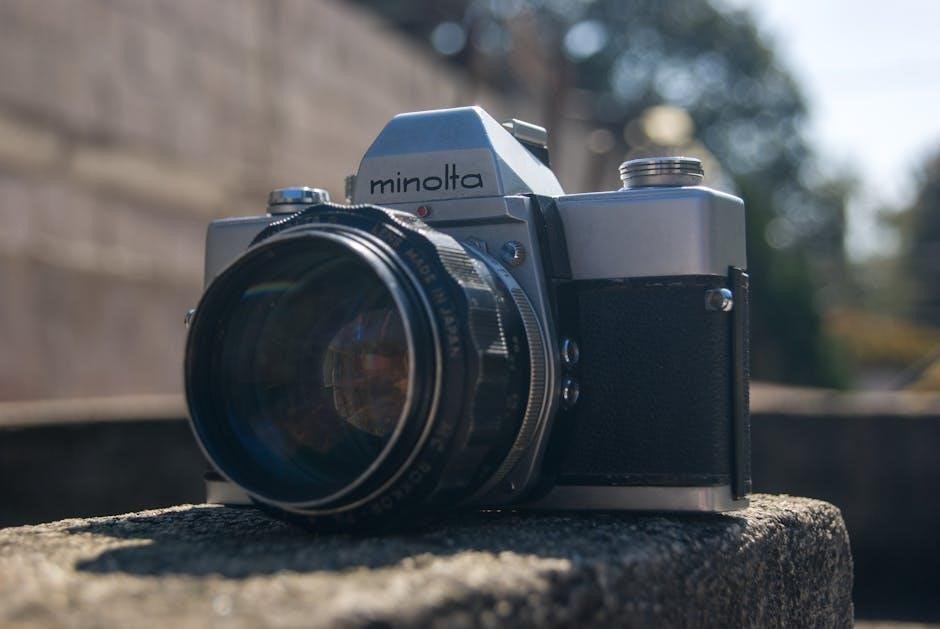
The Minolta SRT 101‚ a remarkably popular SLR‚ achieved success rivaling its initial release‚ serving both professionals and enthusiasts with distinctive character․
This camera‚ one of the first to feature through-the-lens (TTL) full-aperture metering‚ represents a significant milestone in photographic technology and design․
Its robust construction‚ utilizing sleeve bushing‚ contributed to its longevity and enduring appeal among film photographers even today․
Historical Context and Significance
The Minolta SRT 101 emerged during a pivotal era in camera development‚ the 1960s and 70s‚ challenging established brands like Nikon and Canon․ Its introduction marked a shift towards more accessible and user-friendly SLR technology‚ democratizing advanced photographic features․
Prior to the SRT 101‚ accurate exposure often relied on external light meters or estimations․ Minolta’s implementation of TTL (Through-The-Lens) full-aperture metering within the camera body was revolutionary‚ simplifying the process and improving accuracy for photographers of all skill levels․
This innovation‚ combined with its solid build quality and relatively affordable price point‚ propelled the SRT 101 to widespread popularity․ It became a workhorse for both amateur enthusiasts and professionals‚ earning a reputation for reliability and consistent performance․ The camera’s enduring appeal is evidenced by its continued presence and use among film photographers today‚ almost equaling its initial release popularity․
Key Features and Innovations
The Minolta SRT 101 distinguished itself through several key innovations․ Foremost was its TTL (Through-The-Lens) full-aperture metering system‚ a groundbreaking feature allowing for precise exposure readings directly through the viewfinder‚ using the actual lens in use․ This eliminated the need for external metering and simplified the shooting process․
The camera’s mechanical shutter‚ offering a wide range of speeds‚ provided versatility for various shooting conditions․ Its robust construction‚ utilizing a sleeve bushing design‚ ensured durability and long-term reliability․ The SRT 101 also featured a self-timer and a depth-of-field preview lever‚ enhancing creative control․
Furthermore‚ the camera’s compatibility with a wide array of Minolta lenses‚ coupled with its user-friendly design‚ contributed to its widespread adoption․ These features collectively established the SRT 101 as a significant advancement in 35mm SLR technology․

Technical Specifications
The Minolta SRT 101 is a mechanically operated‚ 35mm SLR camera known for its reliable performance and innovative TTL metering system‚ offering precise control․
Shutter Speed Range
The Minolta SRT 101 boasts a versatile shutter speed range‚ crucial for adapting to diverse lighting conditions and creative photographic intentions․ This range extends from a slow 1 second‚ ideal for capturing motion blur or shooting in low-light environments‚ all the way to a swift 1/1000th of a second․
The faster shutter speeds are essential for freezing action‚ like sports or wildlife photography‚ preventing unwanted motion blur․ Intermediate speeds‚ spanning from 2 seconds to 1/250th of a second‚ provide a balance between capturing motion and maintaining sharpness․

Notably‚ the camera features a unique shutter speed follower mechanism‚ which‚ while generally reliable‚ can sometimes experience issues with age‚ requiring attention or repair․ The accurate selection of shutter speed is vital for proper exposure‚ working in tandem with the aperture setting and the camera’s TTL metering system․
Aperture Control and TTL Metering
The Minolta SRT 101’s aperture control‚ managed through the lens‚ directly influences the depth of field and the amount of light reaching the film․ Coupled with its groundbreaking Through-The-Lens (TTL) metering system‚ the camera offers a remarkably intuitive exposure process․
TTL metering measures light directly off the film plane‚ providing highly accurate readings‚ even with varying lens characteristics․ This full-aperture metering allows photographers to view the scene at the lens’s widest opening‚ offering a brighter viewfinder image for easier composition․
The light meter needle‚ visible in the viewfinder‚ indicates exposure accuracy․ Adjusting both aperture and shutter speed until the needle centers ensures a properly exposed photograph․ Understanding this interplay is key to mastering the SRT 101’s capabilities and achieving desired photographic results․
Lens Mount and Compatibility
The Minolta SRT 101 utilizes the Minolta SR mount‚ a bayonet-style mount renowned for its secure and reliable lens attachment․ This mount became a standard for Minolta’s SLR cameras for many years‚ resulting in a vast and diverse range of compatible lenses․
The SR mount allows for full mechanical coupling between the lens and the camera body‚ enabling aperture control and accurate metering․ Numerous Minolta MC and MD lenses are directly compatible‚ offering photographers a wide selection of focal lengths and features․
Adapting modern lenses to the SRT 101 is possible with appropriate adapters‚ though full functionality may be limited․ When selecting lenses‚ carefully evaluate their condition to ensure optimal performance and image quality․

Understanding the SRT 101’s Metering System
The SRT 101 pioneered TTL (through-the-lens) full-aperture metering‚ a groundbreaking innovation allowing accurate exposure readings directly from the viewfinder․
Through-the-Lens (TTL) Full-Aperture Metering Explained
The Minolta SRT 101’s TTL full-aperture metering system was a revolutionary advancement in camera technology․ Unlike earlier systems that measured light reflected from the film plane after passing through the lens‚ TTL metering measures the light before it reaches the film․
This is achieved by a beam splitter within the mirror box‚ diverting a portion of the light to a sensor behind the lens․ Crucially‚ the meter reads the light at the lens’s widest aperture‚ hence “full-aperture․” This method provides a more accurate reading as it accounts for light loss caused by the lens itself․
The advantage of this system is its ability to meter accurately with any lens‚ regardless of its maximum aperture․ It also allows for precise exposure control‚ as the meter directly reflects the light that will actually expose the film․ This innovation significantly simplified achieving correct exposures‚ especially for photographers transitioning from older‚ less sophisticated metering methods․
Using the Light Meter Needle
The SRT 101’s light meter is displayed via a needle within the viewfinder․ This needle operates against a scale‚ indicating under‚ correct‚ or overexposure․ To use it‚ set your desired shutter speed using the shutter speed dial‚ then adjust the aperture until the needle aligns with the center mark – signifying a proper exposure․
If the needle points to the “+” side‚ the image will be overexposed; reduce aperture or increase shutter speed․ Conversely‚ if it points to the “-” side‚ the image will be underexposed; increase aperture or decrease shutter speed․ Remember the follower moves with shutter speed adjustments‚ aiding alignment․
Practice is key to mastering this system․ Understanding how aperture and shutter speed interact‚ and observing the needle’s response‚ will quickly build your confidence and ensure consistently well-exposed photographs․
Metering Modes and Considerations
The Minolta SRT 101 employs a center-weighted‚ through-the-lens (TTL) full-aperture metering system․ This means the meter prioritizes the light in the center of the frame when calculating exposure․ Keep this in mind when composing shots with strong backlighting or significant brightness differences across the scene․
The meter reads at full aperture‚ so the indicated exposure is accurate regardless of the lens’s maximum aperture․ However‚ it doesn’t account for extreme lighting situations․ Snow scenes or very dark subjects may require exposure compensation – typically overexposing by one or two stops․
Always double-check your meter readings‚ especially in challenging conditions․ Understanding the limitations of the system and using your judgment will lead to better photographic results․
Common Issues and Troubleshooting
Minolta SRT 101 cameras sometimes experience shutter speed follower problems or a broken internal shutter speed indicator‚ requiring careful inspection and potential repair․
Shutter Speed Follower Problems
A common issue with the Minolta SRT 101 is a malfunctioning shutter speed follower․ This component is crucial as it mechanically links the shutter speed dial to the light meter needle‚ ensuring accurate exposure readings․ When the follower fails to move correctly with shutter speed adjustments‚ the needle won’t align properly‚ leading to incorrect exposures․
Often‚ this stems from dried-out lubrication within the follower mechanism․ Over time‚ the grease hardens‚ creating friction and hindering smooth movement․ Attempting to force the dial can worsen the problem‚ potentially damaging the delicate internal parts․ A careful cleaning and re-lubrication of the follower assembly are usually required to restore functionality․
More complex cases might involve worn or broken gears within the follower system․ These necessitate a more involved repair‚ potentially requiring disassembly of the top cover and careful examination of the mechanical linkages․ It’s often recommended to seek professional servicing if you’re uncomfortable with such intricate work․
Broken Internal Shutter Speed Indicator
Another frequent issue encountered with the Minolta SRT 101 is a non-functional internal shutter speed indicator․ This small window displays the selected shutter speed‚ aiding in quick visual confirmation․ When broken‚ it doesn’t affect the camera’s functionality – the shutter still operates correctly – but it removes a convenient feature for the photographer․
The indicator typically fails due to a broken plastic gear or a detached linkage within the indicator mechanism․ These parts are small and delicate‚ susceptible to wear and tear over decades of use․ Repairing this issue often involves carefully disassembling the top cover of the camera to access the indicator assembly․

Replacing the broken gear or reattaching the linkage can restore the indicator’s function․ However‚ sourcing replacement parts can be challenging․ Sometimes‚ a skilled technician can fabricate a suitable replacement․ While not essential for operation‚ a working indicator enhances the user experience and adds to the camera’s overall value․
General Mechanical Issues
Beyond specific component failures‚ the Minolta SRT 101‚ being a mechanical camera of considerable age‚ can exhibit general mechanical issues․ These often stem from accumulated dust‚ dried lubricants‚ and general wear and tear on internal parts․ Stiff or sticky controls‚ including the shutter speed dial and film advance lever‚ are common symptoms․
The sleeve bushing design‚ while robust‚ can also become a source of friction over time‚ contributing to sluggish operation․ Regular cleaning and relubrication by a qualified technician can often resolve these issues․ Occasionally‚ the film advance mechanism may become problematic‚ leading to inconsistent film transport․
Careful inspection and adjustment are needed to address this․ It’s crucial to avoid forcing any controls‚ as this can exacerbate existing problems or cause new damage․ Preventative maintenance and gentle handling are key to preserving the SRT 101’s mechanical integrity for years to come․

Maintenance and Care
Preserving your Minolta SRT 101 requires regular cleaning of the body and lens‚ proper storage in a dry place‚ and occasional professional servicing․
Gentle handling and preventative care will ensure this classic camera continues to deliver beautiful images for years to come․
Cleaning the Camera Body and Lens
Maintaining the pristine condition of your Minolta SRT 101 begins with careful cleaning practices; For the camera body‚ utilize a soft‚ dry microfiber cloth to gently wipe away dust and fingerprints․ Avoid harsh chemicals or abrasive cleaners‚ as these can damage the finish․
For more stubborn grime‚ slightly dampen the cloth with distilled water‚ ensuring it’s not overly wet․ Pay particular attention to the film compartment and around the shutter speed dial․
Lens cleaning requires even greater care․ Begin by using a blower brush to remove loose dust particles․ Then‚ employ lens cleaning tissue and a dedicated lens cleaning solution – never use household cleaners!
Apply a small amount of solution to the tissue‚ and gently wipe the lens surface in a circular motion‚ working from the center outwards․ Inspect for streaks and repeat if necessary․ Proper cleaning ensures optimal image quality and protects your investment․
Proper Storage Techniques
Preserving your Minolta SRT 101’s functionality and condition necessitates thoughtful storage․ Ideally‚ store the camera in a cool‚ dry place‚ away from direct sunlight and extreme temperatures․ A dedicated camera bag or case offers excellent protection against dust‚ moisture‚ and accidental impacts․
Before long-term storage‚ remove the batteries to prevent corrosion․ If possible‚ store the camera with the shutter cocked and the lens cap securely fastened․ This minimizes strain on the internal mechanisms․
Consider including a desiccant packet within the storage container to absorb any residual moisture․ Periodically check the camera‚ even during storage‚ to ensure no mold or mildew develops․
Proper storage safeguards your investment‚ ensuring your SRT 101 remains ready for years of photographic enjoyment‚ maintaining its mechanical and optical integrity․
Servicing and Repair Options
Maintaining a vintage Minolta SRT 101 often requires occasional servicing or repair․ Given its age‚ components like the shutter speed follower or internal indicator may fail‚ necessitating professional attention․ Several options exist for restoring your camera to optimal working order․
Specialized camera repair shops‚ familiar with classic film cameras‚ are ideal․ Online resources and forums dedicated to the Minolta SRT 101 can connect you with experienced technicians․ DIY repairs are possible for skilled individuals‚ but proceed cautiously‚ as improper handling can cause further damage․
Expect costs to vary depending on the complexity of the repair․ Regular cleaning and preventative maintenance can minimize the need for extensive servicing‚ extending the camera’s lifespan․

Lenses for the Minolta SRT 101
The Minolta SRT 101 utilizes a versatile lens mount‚ offering a wide selection of compatible lenses‚ both vintage Minolta and adapted modern options for diverse shooting styles․
Popular Lens Choices
For the Minolta SRT 101‚ several lenses consistently stand out as excellent choices for photographers seeking quality and value․ The Minolta Rokkor 50mm f/1․7 is a highly regarded standard lens‚ known for its sharpness‚ pleasing bokeh‚ and affordability․ It’s a fantastic all-around performer‚ ideal for everyday shooting and portraits․
Another popular option is the Minolta Rokkor 50mm f/1․4‚ offering even greater low-light capabilities and a shallower depth of field․ Wider angle options include the Minolta Rokkor 28mm f/2․8‚ perfect for landscapes and street photography‚ and the Minolta Rokkor 35mm f/2․8‚ a versatile choice for various subjects․
Telephoto enthusiasts often favor the Minolta Rokkor 135mm f/2․8‚ delivering beautiful compression and subject isolation․ These Rokkor lenses‚ built with quality glass and solid construction‚ provide a classic shooting experience and consistently deliver impressive results with the SRT 101․
Adapting Modern Lenses
Adapting modern lenses to the Minolta SRT 101 opens up a world of possibilities‚ though it requires careful consideration․ Due to the SRT 101’s Minolta SR mount‚ adapters are essential to utilize lenses from other systems like Canon EF‚ Nikon F‚ or Sony E-mount․
These adapters typically introduce a manual aperture control‚ as the electronic communication between the camera and lens is lost․ Focusing will also be entirely manual‚ embracing the tactile experience of older photography․
While image quality can be excellent‚ be aware of potential light loss caused by the adapter’s thickness․ Ensure the adapter is well-constructed to maintain proper lens alignment and prevent vignetting․ Adapting lenses allows exploration of diverse optics‚ breathing new life into this classic camera․
Lens Condition and Evaluation
Evaluating a lens for your Minolta SRT 101 is crucial for optimal image quality․ Thoroughly inspect the glass for scratches‚ fungus‚ haze‚ or separation – these significantly impact performance․ Check the aperture blades for oil or sluggish movement‚ ensuring they form a clean opening at all settings․
Examine the lens mount for damage or wear‚ guaranteeing a secure fit on the camera body․ A smooth focusing ring is essential for precise adjustments․ Consider the lens’s coating condition; deteriorated coatings can reduce contrast and increase flare․
Prioritize lenses with minimal cosmetic damage‚ as this often indicates careful ownership․ A well-maintained lens will deliver sharper‚ clearer images and provide years of reliable service with your SRT 101․

Using the Minolta SRT 101 Today
The SRT 101 remains a capable camera for modern film photography‚ offering a tactile experience and excellent image quality with appropriate film choices and techniques․
Film Choices and Recommendations
Selecting the right film for your Minolta SRT 101 significantly impacts the final aesthetic of your photographs․ Black and white films‚ like Ilford HP5 Plus or Kodak Tri-X‚ are excellent choices for classic‚ high-contrast images‚ offering substantial grain and tonal range․ These films perform well in various lighting conditions and are forgiving for beginners․
For color photography‚ Kodak Portra 400 is a versatile option‚ known for its pleasing skin tones and fine grain․ Fujifilm Superia X-TRA 400 provides vibrant colors and is a cost-effective choice for everyday shooting․ Experimenting with different ISO speeds allows you to control depth of field and motion blur․
Lower ISO films (like 100) are ideal for bright daylight‚ while higher ISO films (like 800 or even 3200) are better suited for low-light situations․ Consider the specific subject matter and desired look when making your film selection․ Don’t be afraid to try expired film for unique effects‚ but be aware that color shifts and reduced sensitivity may occur․
Shooting Techniques for Optimal Results
Mastering manual exposure is key to unlocking the Minolta SRT 101’s full potential․ Utilize the built-in TTL metering system‚ carefully observing the needle to achieve correct exposure․ Remember the “sunny 16” rule as a starting point – f/16 at 1/100th of a second in bright sunlight․
Practice bracketing your exposures‚ taking shots slightly over and under the metered reading‚ to ensure you capture the desired result․ Pay close attention to composition‚ utilizing the viewfinder to frame your shots effectively․
Slow down and deliberately focus‚ as the SRT 101 requires manual focusing․ Experiment with different apertures to control depth of field‚ creating blurred backgrounds or sharp‚ detailed images․ Embrace the tactile experience and enjoy the deliberate process of film photography – it encourages mindful shooting and thoughtful composition․
Resources for SRT 101 Users
Online forums and communities dedicated to classic Minolta cameras are invaluable resources․ These platforms offer troubleshooting advice‚ repair guides‚ and a space to connect with fellow enthusiasts․ Websites specializing in vintage cameras often feature detailed reviews and user experiences with the SRT 101․
Explore online marketplaces for used lenses and accessories․ Repair manuals and service documentation can sometimes be found online‚ aiding in DIY maintenance․ Don’t hesitate to consult experienced camera repair technicians for complex issues․
Numerous books cover classic SLR photography and film developing techniques‚ enhancing your understanding of the SRT 101’s capabilities․ Remember to leverage the collective knowledge of the film photography community for a rewarding experience․