Missing 411 Cluster Map: An In-Depth Analysis (as of 04/07/2026)
Recent online discussions highlight a growing interest in correlating the Missing 411 map with search areas,
particularly those extensively searched since 2010, to potentially eliminate redundant investigation zones.
Furthermore, comparisons between Missing 411 case locations and American cave systems,
especially the Mammoth Cave system, suggest a potentially significant, yet unexplained, connection.
Notably, British Columbia’s high-incident areas are showcased on a dedicated cluster map,
reflecting years of research into unexplained disappearances within its rugged wilderness terrain.
The Missing 411 phenomenon, popularized by author David Paulides, centers around a perplexing pattern of unexplained disappearances, primarily within North American wilderness areas. These aren’t typical lost person cases; they exhibit unusual characteristics that defy conventional explanations. Individuals vanish under seemingly impossible circumstances, often with little to no trace, and searches frequently yield no results despite exhaustive efforts.
A key aspect of this phenomenon is the clustering of these incidents. Paulides’ research revealed that disappearances aren’t randomly distributed; instead, they concentrate in specific geographic areas, forming what are known as “clusters.” These clusters, visually represented on the Missing 411 cluster map, become focal points for investigation and analysis. The map itself, updated over time, serves as a crucial tool for identifying potential patterns and anomalies.
Online communities, like those on Reddit (r/Missing411), actively discuss these cases and contribute to the ongoing investigation, highlighting the public’s fascination and concern surrounding these mysterious events. The phenomenon challenges conventional understanding of wilderness survival and search and rescue protocols.
David Paulides and the Missing 411 Series

David Paulides is a former law enforcement officer and the driving force behind the Missing 411 series – a collection of books and documentaries meticulously documenting unexplained disappearances in North America. His work began with a focus on cases within national parks, quickly expanding to encompass a broader range of wilderness disappearances exhibiting common, unusual traits.
Paulides’ methodology involves detailed case analysis, focusing on anomalies like the lack of evidence, the age demographics of the missing, and the often-rugged terrain where they vanish. He created the Missing 411 cluster map as a visual representation of these patterns, revealing concentrated areas of unexplained disappearances. The 2019 map, frequently referenced, showcases these hotspots.
His research has sparked considerable debate, with some praising his dedication to uncovering overlooked cases, while others question his interpretations. Regardless, Paulides’ work has brought significant attention to these mysterious events and fostered a dedicated community of researchers and enthusiasts.
Understanding the Missing 411 Cluster Map Concept
The Missing 411 Cluster Map isn’t a random scattering of points; it’s a visual tool developed by David Paulides to illustrate statistically significant concentrations of unexplained disappearances. These aren’t simply areas with high foot traffic, but locations where individuals vanish under perplexing circumstances, often lacking typical indicators of foul play or accidental death.
The map’s creation involved analyzing hundreds of missing persons cases, identifying recurring patterns in terrain, proximity to specific landmarks (like caves), and the characteristics of the missing individuals. Clusters represent areas where these anomalies converge, suggesting a potential underlying factor contributing to the disappearances.
It’s crucial to understand the map isn’t definitive proof of a single cause, but rather a tool for focusing research and identifying areas warranting further investigation. The 2019 version, often cited, provides a snapshot of these clusters as of that date.
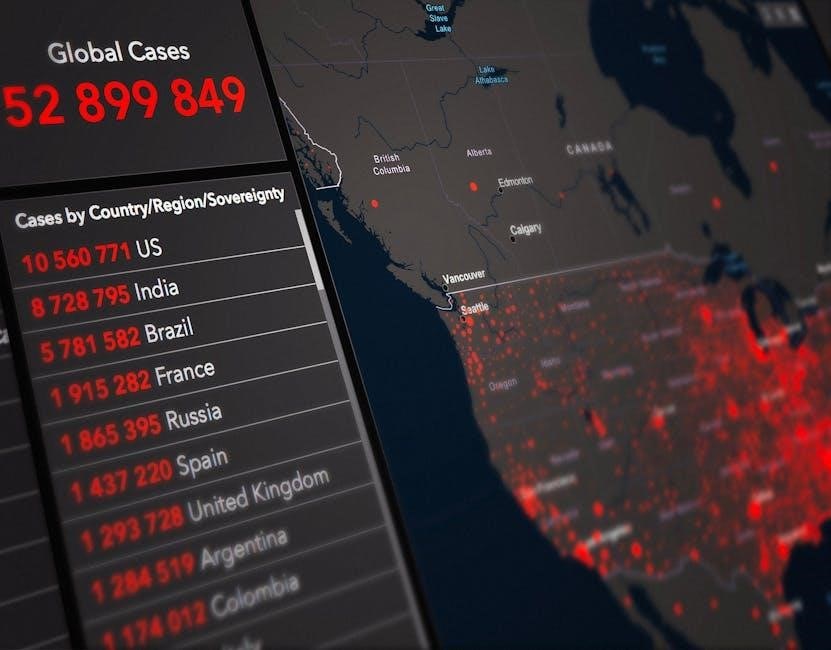
Key Geographic Clusters Identified on the Map
Analysis reveals prominent clusters in North America, notably Yosemite/Motherlode, British Columbia, and the Oklahoma/Arkansas region,
demanding focused scrutiny due to their high incidence rates.
North American Clusters: Overview
The Missing 411 map distinctly highlights several concentrated areas of unexplained disappearances across North America. These aren’t random occurrences; instead, they represent statistically significant clusters demanding deeper investigation. The largest and most prominent cluster resides within the Yosemite/Motherlode region of California, consistently appearing as a hotspot in David Paulides’ analyses.
Secondly, British Columbia, Canada, showcases the world’s second-largest cluster, characterized by its vast, rugged wilderness and numerous documented cases. A significant cluster also emerges in the Oklahoma/Arkansas area, specifically around Fort Smith, Arkansas, and Devil’s Den State Park, prompting local interest and exploration.
These clusters aren’t simply about the number of missing persons, but also the unusual circumstances surrounding their disappearances, often lacking typical indicators of foul play or accidental wandering. The map serves as a visual representation of these patterns, guiding researchers towards areas requiring focused attention.
Yosemite/Motherlode Cluster – A Significant Hotspot
The Yosemite/Motherlode region of California consistently emerges as the most significant hotspot on the Missing 411 cluster map. Analyses, including screenshots from David Paulides’ work as of 2019, demonstrate this area’s disproportionately high number of unexplained disappearances. This isn’t a recent phenomenon; cases span decades, creating a deeply concerning pattern.
Characteristics of these cases often include individuals vanishing while hiking or engaging in outdoor activities, with minimal or no trace evidence left behind. Search efforts are frequently extensive, yet yield no conclusive results. The rugged terrain, encompassing dense forests and steep canyons, presents considerable challenges to search and rescue teams.
The concentration of cases within this relatively confined geographic area suggests factors beyond typical wilderness hazards are at play, prompting ongoing investigation and speculation regarding potential underlying causes. This cluster remains central to the Missing 411 phenomenon.
British Columbia, Canada – The Second Largest Cluster
British Columbia (BC) stands as the second largest identified cluster on the Missing 411 map, characterized by a high incidence of unexplained disappearances. Compiled from years of dedicated research, a specific map showcases BC’s hotspots, each location representing a documented case lacking conventional explanations. The province’s vast and exceptionally rugged wilderness is frequently cited as a contributing factor.
The challenging terrain – encompassing dense forests, mountains, and remote coastal regions – complicates search and rescue operations, often hindering efforts to locate missing individuals. Cases often involve experienced outdoorsmen vanishing without a trace, raising questions beyond simple accidental loss.
The sheer scale of BC’s wilderness, coupled with the recurring patterns of disappearances, fuels speculation about potential underlying causes, making it a critical area of focus for Missing 411 researchers and enthusiasts.
Oklahoma/Arkansas Cluster – Fort Smith and Devil’s Den State Park
The Oklahoma/Arkansas region presents a notable cluster on the Missing 411 map, specifically centered around Fort Smith, Arkansas, and extending into Devil’s Den State Park. Online discussions reveal a focused interest in this area, with individuals expressing a desire to investigate the cluster firsthand.
Devil’s Den State Park, known for its rugged terrain and extensive cave systems, appears to be a focal point within the cluster. The park’s challenging landscape and remote locations contribute to the difficulties in search and rescue operations, mirroring patterns observed in other Missing 411 hotspots.
The concentration of cases near Fort Smith suggests a potential geographic anomaly, prompting further investigation into possible correlations with environmental factors or other contributing elements within this specific region.

Correlations and Potential Explanations
Emerging patterns suggest connections between Missing 411 clusters, cave systems – like Mammoth Cave – and proximity to military installations,
demanding deeper analytical scrutiny.
The Cave System Connection
A compelling correlation has emerged between the geographic distribution of Missing 411 cases and the extensive network of cave systems across North America. Online discussions, particularly on Reddit, highlight this intriguing relationship, with users noting a visual overlap when comparing Missing 411 cluster maps to maps detailing cave locations.
The Mammoth Cave system in Kentucky has garnered particular attention, prompting speculation about a potential link between disappearances and subterranean environments. This isn’t to suggest caves are causing disappearances, but rather that they may be a common factor in certain clusters. The complex, often unexplored nature of these systems presents unique challenges for search and rescue, and could potentially offer concealment or access points for individuals intentionally avoiding detection.
Further investigation is needed to determine if this correlation is statistically significant or merely coincidental, but the anecdotal evidence and visual comparisons warrant continued exploration of this potential connection.
Mammoth Cave System and Missing Persons Cases
The sheer scale of the Mammoth Cave System – the world’s longest known cave system – presents unique challenges when considering its potential connection to Missing 411 cases. Its vastness, with over 400 miles of explored passageways, offers numerous opportunities for individuals to become lost or concealed, even with extensive search efforts.
While direct links between specific disappearances and the cave system remain unconfirmed, the proximity of reported Missing 411 incidents to the Mammoth Cave area raises questions. The complex topography above ground, combined with the labyrinthine nature of the caves themselves, could contribute to disorientation and difficulty in locating missing persons.
Speculation exists regarding potential undiscovered entrances or connections within the system, further complicating search operations. Investigating historical records of disappearances near the cave, alongside detailed mapping of unexplored sections, may reveal patterns or clues.
Proximity to Military Bases
Analysis reveals a noteworthy correlation between the locations of Missing 411 clusters and the presence of military installations. Several clusters appear in proximity to active or former military bases, prompting investigation into potential contributing factors. This isn’t to imply direct involvement, but rather to explore possible connections requiring further scrutiny.
Restricted airspace, training exercises, and classified operations within these areas could potentially complicate search and rescue efforts, or even contribute to disorientation. The presence of sensitive technologies or unusual environmental conditions near bases also warrants consideration.
A YouTube video showcasing a map comparing Missing 411 clusters with military entrance bases has gained traction, fueling online discussion. Further research is needed to determine if this proximity is coincidental or indicative of a more complex relationship.
Analysis of Missing 411 Cases Near Military Installations
Detailed examination of cases near military installations reveals recurring patterns. Many involve individuals with no history of mental illness or suicidal tendencies, disappearing during routine outdoor activities. The terrain surrounding these bases is often rugged and expansive, complicating search efforts and increasing the likelihood of prolonged searches.
Reports suggest potential interference with communication systems during some searches, possibly due to military activity. This interference could hinder rescue teams and delay critical response times. The possibility of accidental encounters with classified operations, while speculative, cannot be entirely dismissed.
Further investigation should focus on obtaining access to military records related to exercises and activities occurring around the time of disappearances. Analyzing these records could reveal potential contributing factors or shed light on unusual circumstances.
High-Traffic Areas and Search Exhaustion

A critical consideration when analyzing the Missing 411 map is the impact of high-traffic areas on search effectiveness. Locations frequently visited by hikers and tourists may appear to offer easier rescue opportunities, but can also lead to search exhaustion. Extensive prior searches in these zones, as discussed on Reddit’s r/FindingFennsGold, may have already thoroughly combed the terrain.
The assumption that a highly visible area guarantees a quick find can be misleading. Overconfidence and a reliance on conventional search methods may overlook subtle clues or unconventional hiding places. Re-evaluating previously searched locations with fresh perspectives and advanced technologies is crucial.
Focusing on less-traveled routes and unexplored areas adjacent to popular trails could yield more promising results, particularly in established cluster zones.
Re-evaluating Previously Searched Locations
Given the potential for search exhaustion in high-traffic areas within Missing 411 clusters, a systematic re-evaluation of previously searched locations is paramount. This isn’t simply repeating the same search patterns, but employing new methodologies and technologies.
Consideration should be given to factors overlooked in initial searches – subtle terrain features, micro-climates, and potential for concealment. Utilizing drone technology with advanced sensors, including thermal imaging, can reveal anomalies missed by ground teams.
Furthermore, revisiting witness statements and analyzing them with a critical eye, looking for inconsistencies or overlooked details, may provide new leads. A fresh perspective, unburdened by initial assumptions, is essential for uncovering hidden clues.

Map Data and Methodology
The map’s compilation relies on documented missing persons cases, leveraging official reports and online databases.
However, data limitations and evolving map versions, like the 2019 iteration, must be acknowledged.
Ongoing refinement incorporates citizen science contributions and addresses inherent challenges in data accuracy and completeness.
Data Sources Used in Map Compilation
The foundation of the Missing 411 Cluster Map rests upon a diverse collection of data sources, primarily focusing on officially reported missing persons cases. These include records from local, state, and federal law enforcement agencies across North America, meticulously documented and cross-referenced. Publicly accessible databases, such as the National Missing and Unidentified Persons System (NamUs), also contribute significantly to the map’s information base.
Furthermore, David Paulides’ extensive research incorporated historical newspaper archives, park ranger reports, and search and rescue team logs. Online forums, like Reddit’s r/Missing411, serve as a platform for citizen scientists to contribute anecdotal evidence and potentially overlooked cases. However, it’s crucial to note that information from online sources undergoes rigorous verification before inclusion. The 2019 map, a frequently referenced version, reflects data compiled up to that point, and subsequent updates aim to incorporate newly discovered information and refine existing entries.
Limitations of the Missing 411 Map Data
Despite its comprehensive nature, the Missing 411 Cluster Map possesses inherent limitations. A primary concern is the reliance on officially reported cases, potentially excluding individuals whose disappearances weren’t formally documented or investigated. Data consistency across different jurisdictions also presents a challenge, with varying reporting standards and levels of detail.
Moreover, the map’s interpretation is subjective; clustering patterns don’t automatically imply causation. The influence of search intensity, as discussed on platforms like r/FindingFennsGold, must be considered – areas heavily searched may appear less prone to disappearances simply due to increased visibility. The 2019 map, while valuable, is now dated, and the map’s accuracy is dependent on continued data updates and verification. Finally, the map doesn’t account for factors like transient populations or unreported recreational activities.
Map Updates and Versions (e.g., 2019 Map)
The Missing 411 Cluster Map has undergone several iterations, with the 2019 version frequently referenced as a key benchmark, often appearing as screenshots from David Paulides’ work. However, maintaining an up-to-date map is a continuous process, requiring ongoing data collection and analysis of newly reported cases.
Currently, a fully updated map reflecting data through April 7th, 2026, is not publicly available. The original map’s data is supplemented by community contributions and online discussions, such as those on Reddit, which attempt to refine and expand upon the initial findings. Future versions will likely incorporate these citizen science efforts. The challenge lies in verifying the accuracy of user-submitted data and integrating it seamlessly into the existing framework. Regular updates are crucial to ensure the map remains a relevant and reliable resource.

The Role of Wilderness and Terrain
Rugged wilderness areas, like British Columbia, consistently appear as significant hotspots on the Missing 411 map,
presenting unique challenges to search and rescue operations.
Difficult terrain can hinder efforts,
potentially contributing to prolonged searches and, tragically, unresolved disappearances within these remote regions.
Rugged Wilderness Areas as Contributing Factors
The prevalence of disappearances within vast, untamed wilderness areas is a recurring theme highlighted by the Missing 411 map. Locations like British Columbia, with its expansive and challenging terrain, demonstrate a disproportionately high number of unexplained cases. This suggests that the very nature of these environments – dense forests, steep canyons, and remote locations – may play a significant role in these incidents.
These areas often lack consistent cell service, making communication difficult and hindering rapid response times. The sheer scale of the wilderness necessitates extensive search efforts, often relying on volunteer groups and limited resources. Furthermore, the unpredictable weather conditions common in mountainous regions can quickly complicate search operations, increasing the risk for both the missing individuals and the search teams. The inherent difficulties of navigating such terrain contribute to the complexity of these cases.
It’s crucial to acknowledge that wilderness areas, while beautiful and inviting, present inherent dangers that can exacerbate the circumstances surrounding a disappearance, potentially leading to prolonged searches and tragic outcomes.
Impact of Terrain on Search and Rescue Efforts
The challenging terrain associated with Missing 411 clusters significantly hinders search and rescue (SAR) operations. Steep inclines, dense vegetation, and complex cave systems – like those found near the Mammoth Cave system – demand specialized equipment and highly trained personnel. Traditional search methods, such as grid searches, become exponentially more difficult and time-consuming in these environments.
Moreover, the ruggedness often limits the effectiveness of aerial searches, as tree cover and canyon walls obstruct visibility. Canine units can be hampered by rocky ground and scent dispersal patterns. The remoteness of these locations also presents logistical challenges, delaying the arrival of resources and increasing the window of vulnerability for missing persons.
Re-evaluating previously searched areas, as discussed on Reddit, becomes vital, acknowledging that initial efforts may have been insufficient due to the terrain’s complexity. Effective SAR requires adaptive strategies and a thorough understanding of the environmental obstacles.
Community Contributions and Online Discussions
Online platforms like Reddit’s r/Missing411 and r/FindingFennsGold foster discussions, map refinement, and citizen science efforts related to the Missing 411 phenomenon.
These communities actively share insights, analyze patterns, and contribute to a deeper understanding of the cluster map and associated cases.
Reddit Discussions: r/Missing411 and r/FindingFennsGold
The Reddit communities dedicated to Missing 411 and, surprisingly, even those focused on treasure hunting like r/FindingFennsGold, serve as vibrant hubs for discussion and analysis. Users on r/Missing411 frequently dissect case details, share personal experiences in affected areas, and debate potential explanations for the patterns observed on the cluster map.
Interestingly, the r/FindingFennsGold forum has seen threads questioning the utility of searching areas already heavily combed during previous missing person investigations, suggesting a practical application of the map data. Members ponder if high-traffic areas should be excluded from new searches, acknowledging prior search efforts.
These discussions often involve sharing links to map images, including the 2019 version, and comparing them to other datasets, such as cave system maps, as highlighted by a user noting the potential correlation between disappearances and cave locations. This collaborative approach demonstrates the power of citizen science in exploring the Missing 411 phenomenon.
Citizen Science and Map Refinement
The Missing 411 map isn’t a static document; its evolution is deeply intertwined with contributions from a dedicated online community. Individuals actively engage in refining the map by submitting documented cases, verifying existing data points, and identifying potential discrepancies. This collaborative effort embodies the principles of citizen science, leveraging collective intelligence to enhance accuracy.
Reddit forums, particularly r/Missing411, function as crucial platforms for this refinement process. Users share local knowledge, historical records, and firsthand accounts, enriching the map’s dataset. The comparison of the map with other datasets, like cave systems, initiated by community members, exemplifies this proactive approach.
This ongoing process of data validation and expansion is vital for maintaining the map’s relevance and utility. It transforms the Missing 411 map from a singular project into a dynamic, community-driven resource, continually improving its ability to reveal patterns and potential connections.

Future Research Directions
Expanding the map with new data and investigating anomalies are crucial next steps. Further analysis of patterns,
alongside cave systems and military base proximity, will be essential.
Continued citizen science contributions and refined data validation will also be vital for ongoing progress.
Expanding the Map with New Data
The continued expansion of the Missing 411 cluster map relies heavily on incorporating newly reported cases and refining existing data points. Currently, the map’s accuracy is limited by the completeness of publicly available information, necessitating a proactive approach to data collection. This includes actively monitoring missing persons databases, law enforcement reports, and news articles for potential additions.
Furthermore, integrating data from previously overlooked sources, such as historical records and anecdotal evidence shared within online communities like Reddit’s r/Missing411, could reveal previously unidentified patterns. A key focus should be on standardizing data entry to ensure consistency and facilitate more robust statistical analysis. The goal is to create a dynamic, evolving resource that reflects the most current understanding of these perplexing disappearances.
Ultimately, a more comprehensive dataset will allow for a more nuanced understanding of the geographical and environmental factors potentially contributing to the Missing 411 phenomenon.
Investigating Potential Anomalies and Patterns
Analysis of the Missing 411 cluster map reveals recurring anomalies demanding further investigation. The observed correlation between disappearance locations and proximity to cave systems, particularly the Mammoth Cave system, warrants a dedicated study of subterranean environments as potential contributing factors. Similarly, the map’s relationship to military installations, highlighted in online discussions and YouTube analyses, requires rigorous examination to determine if any statistically significant link exists.
Moreover, identifying patterns in victim demographics – age, experience level, and pre-existing health conditions – could offer valuable insights. Investigating whether previously searched areas, as discussed on r/FindingFennsGold, consistently yield negative results could refine search protocols.
Ultimately, a deeper dive into these anomalies may uncover underlying causes or previously unrecognized variables influencing these mysterious disappearances.